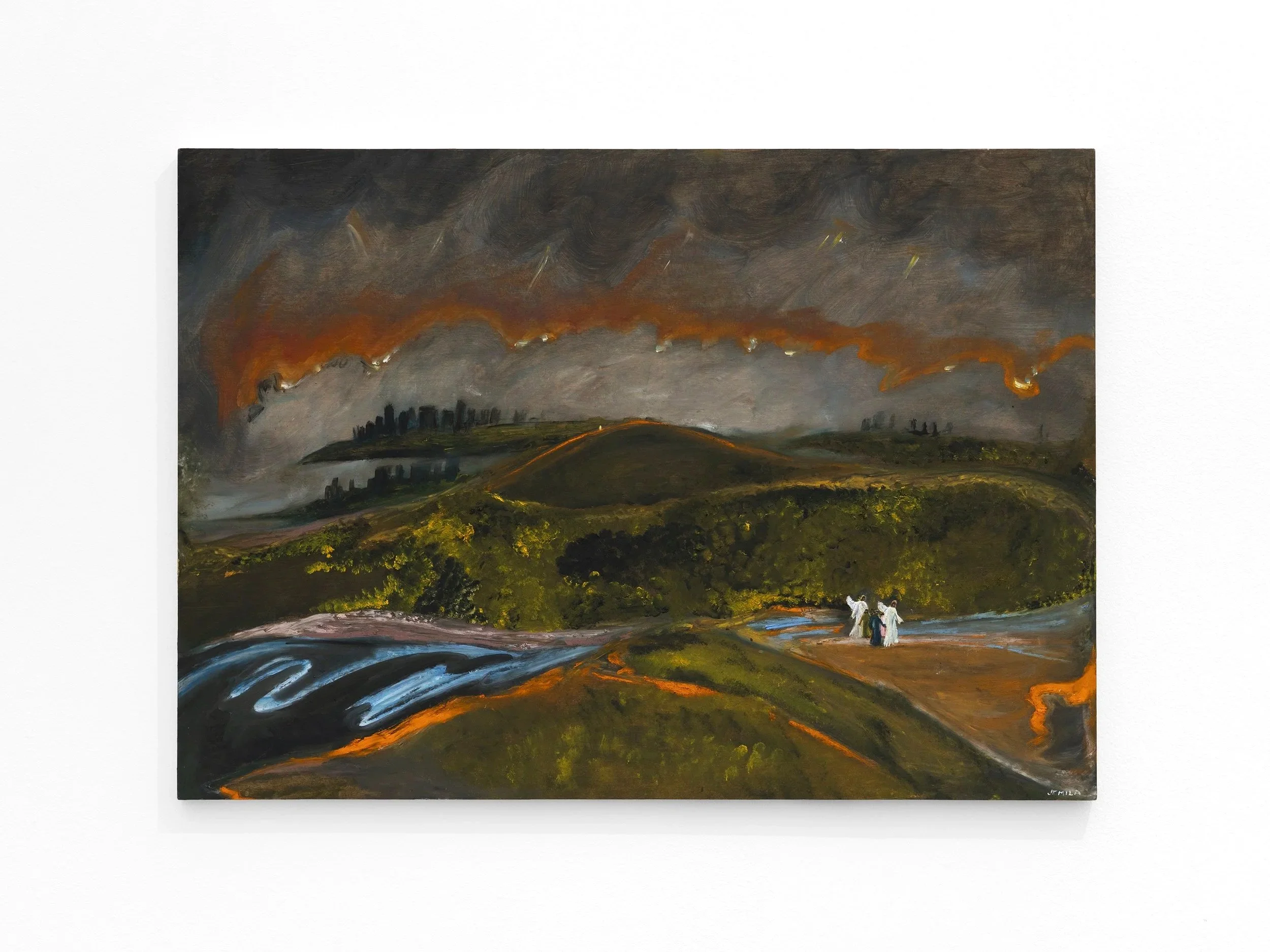
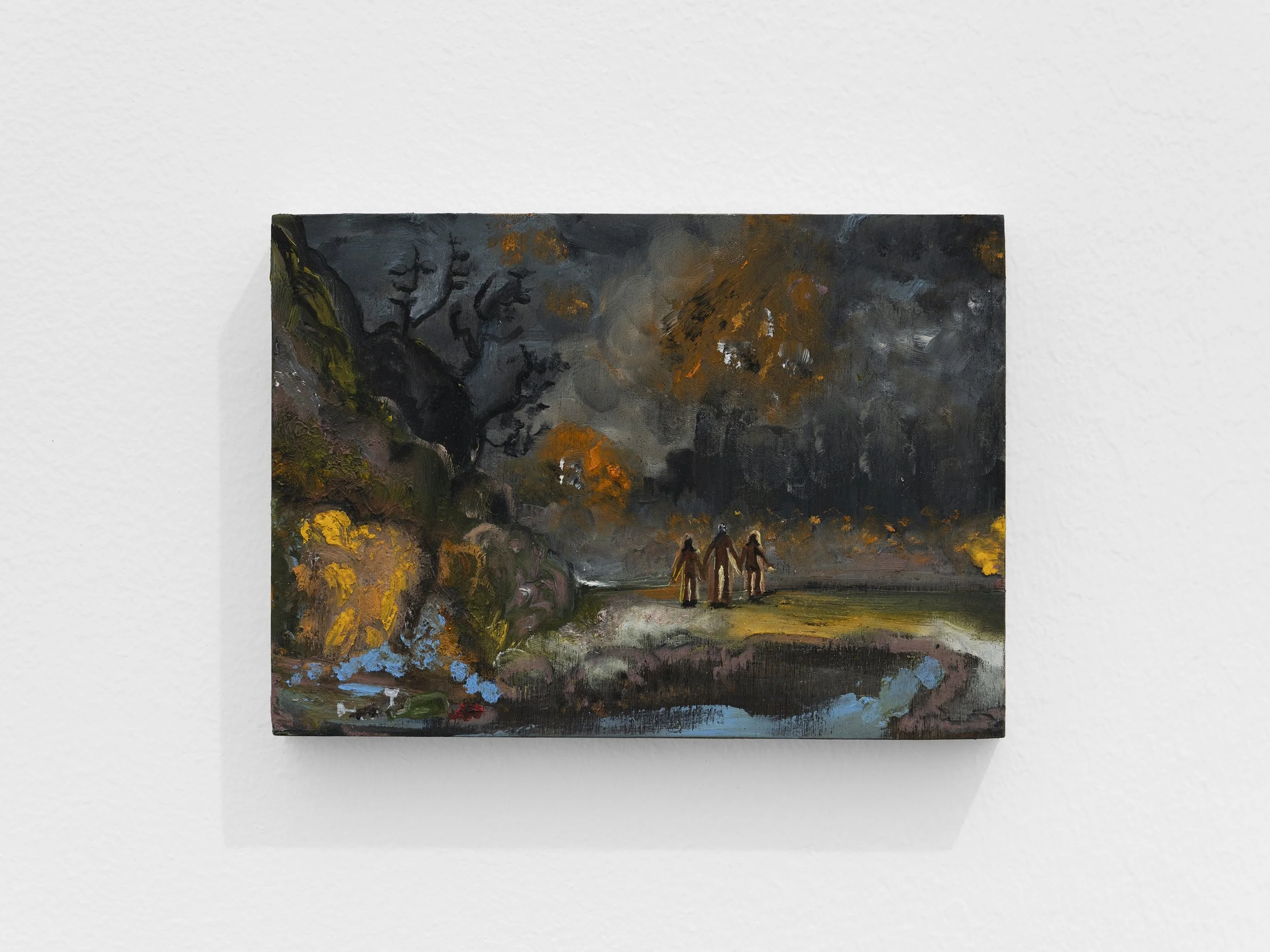
House Of Incest, 2026, oil on wood panel, 59.4 × 84.1 cm
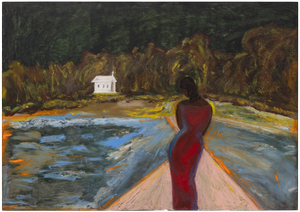
I recently painted a series of works that were presented at Frieze London this past October. The paintings offer a kind of visual retelling of the biblical story of Sodom and Gomorrah, with particular attention to the roles of Lot, his wife and his daughters.
I have been interested in, and somewhat disturbed by, this story ever since I first encountered it as a child. The idea of a woman turning into a pillar of salt was instantly intriguing to me. With my childhood understanding of the world, it didn't seem entirely outside the realm of possibility. It felt completely plausible that disobeying a commandment from God could result in such an extraordinary punishment. Fear and control were, at least within my household, some of the central pillars upon which faith was built.
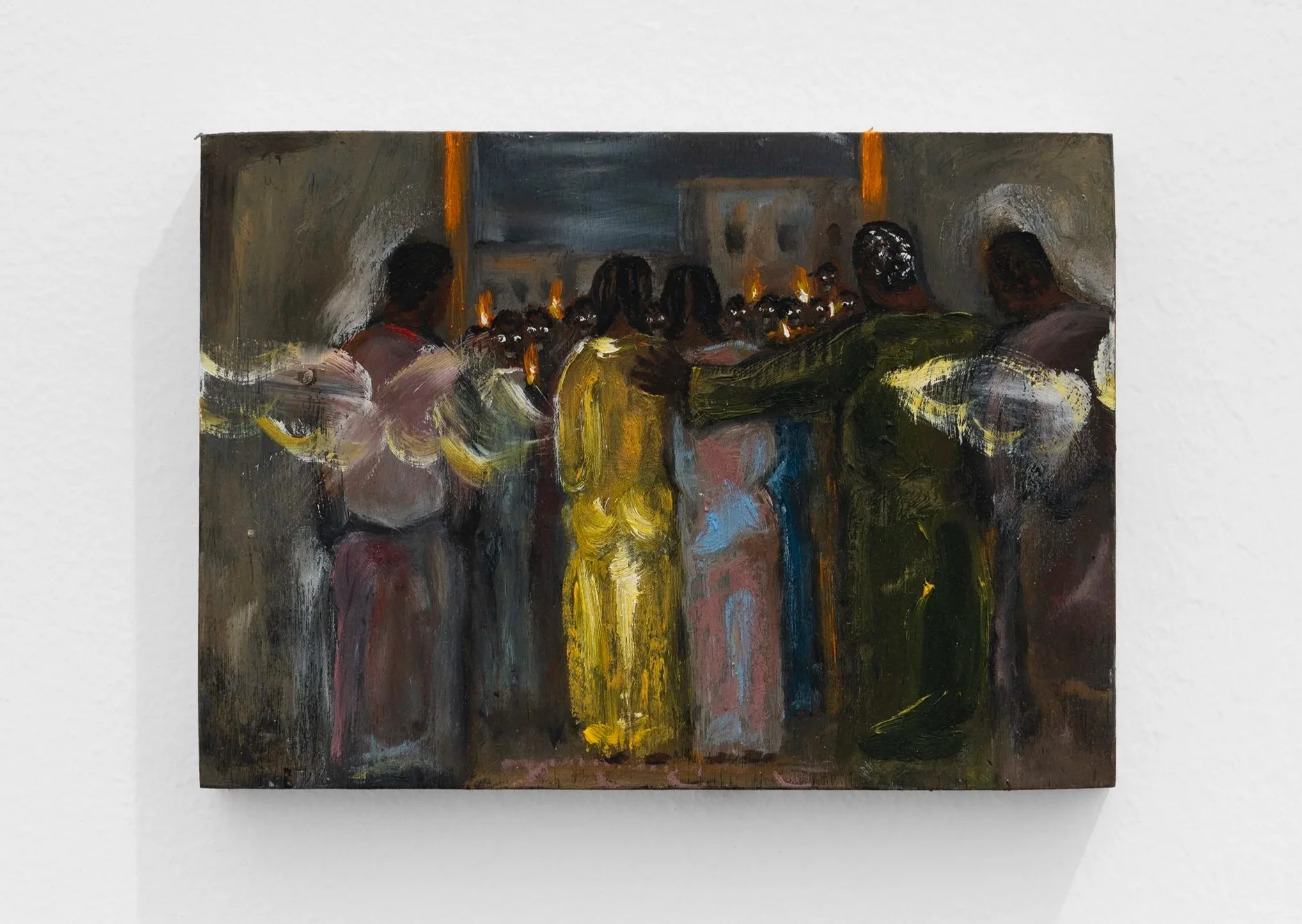
Lambs to Wolves, 2026, oil on wood panel, 13 ×17.5cm
It wasn't until I was older that I began to look more closely at the other, arguably more disturbing, aspects of the story. Lot offering his daughters to an angry mob in exchange for leaving the visiting angels alone, and his daughters later allegedly getting him drunk in order to seduce him and become pregnant by him. If we are to accept these accounts as true and examine them through a contemporary understanding of familial dynamics and patriarchy, it is not difficult to question the narrative we have been given. I find myself wondering whether it was, in fact, Lot who intoxicated his daughters and coerced or forced them into sexual acts for his own gratification.
There are many biblical narratives that seem to position women who exercise any degree of autonomy as destructive or dangerous figures. From Eve, whose actions are presented as the catalyst for humanity's downfall, to Lot's wife and daughters, women are repeatedly cast as the source of temptation, disobedience and destruction. Their stories are often told through a lens that leaves little room for their own agency, interior lives or perspectives.
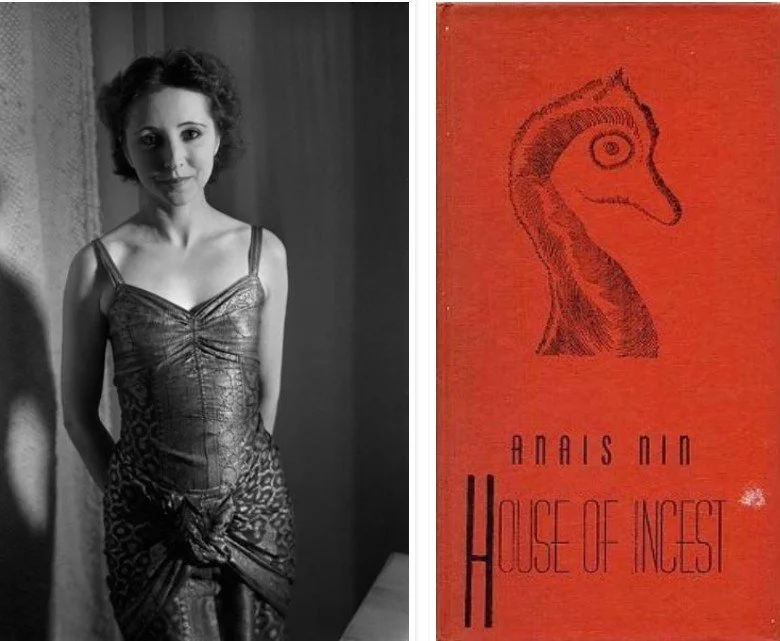
Anais Nin, House Of Incest, 1936
While making these paintings, I was reading The Passion According to G.H. by Clarice Lispector and House of Incest by Anaïs Nin, the latter of which I also used as the title for one of the works. We know remarkably little about Lot's wife from the biblical account, but I found myself imagining a woman who might share something with the protagonists of both books: women who have abandoned conventional ideas of sanity, morality and order in favour of following themselves into the deepest and darkest corners of their own psyches. Women who are at once consumed by their inner worlds, yet remain entangled in vanity, desire and the impulses of the flesh.
In many ways, I am interested in imagining these female characters beyond the brief, cautionary role assigned to them in their biblical stories. Rather than seeing them simply as a woman who disobeyed God and were punished for it, I want to consider who they might have been outside of that moment, what their inner worlds might have looked like, and whether the ‘destructive’ roles that allegedly played are accurate, or a false retelling of a story intended to once again place blame on a woman, in order to protect the legacy of a man.
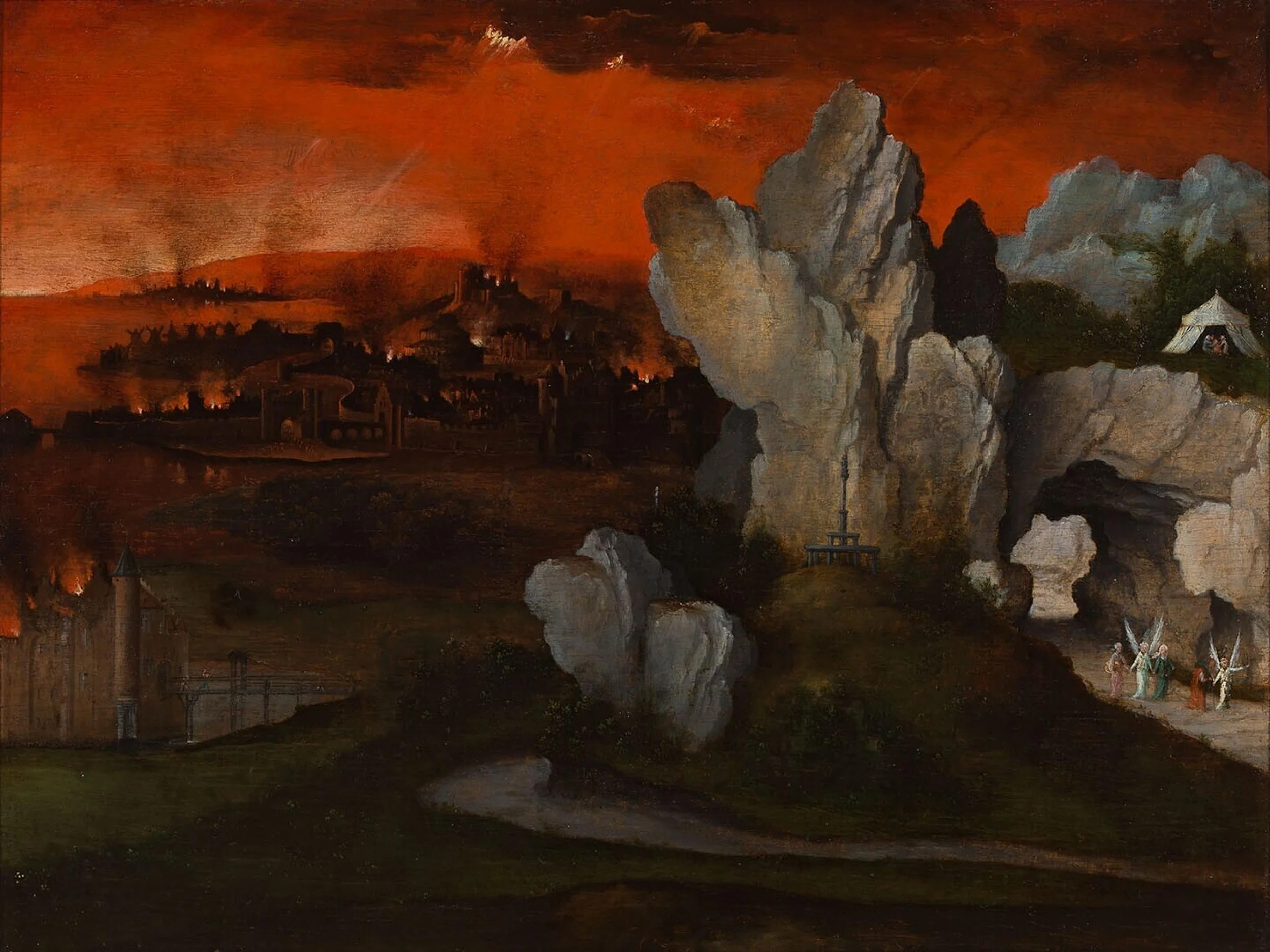
While developing these paintings, I spent a lot of time looking at historical depictions of biblical scenes relating to Sodom and Gomorrah. One painting in particular stood out to me: Landscape before the Destruction of Sodom and Gomorrah by Joachim Patinir. I was especially drawn to the large white structures on the right-hand side of the composition. I assume they are rock formations, although they could just as easily be thick plumes of smoke. I found this ambiguity particularly compelling; the uncertainty of what I was looking at only made the forms more intriguing to me.
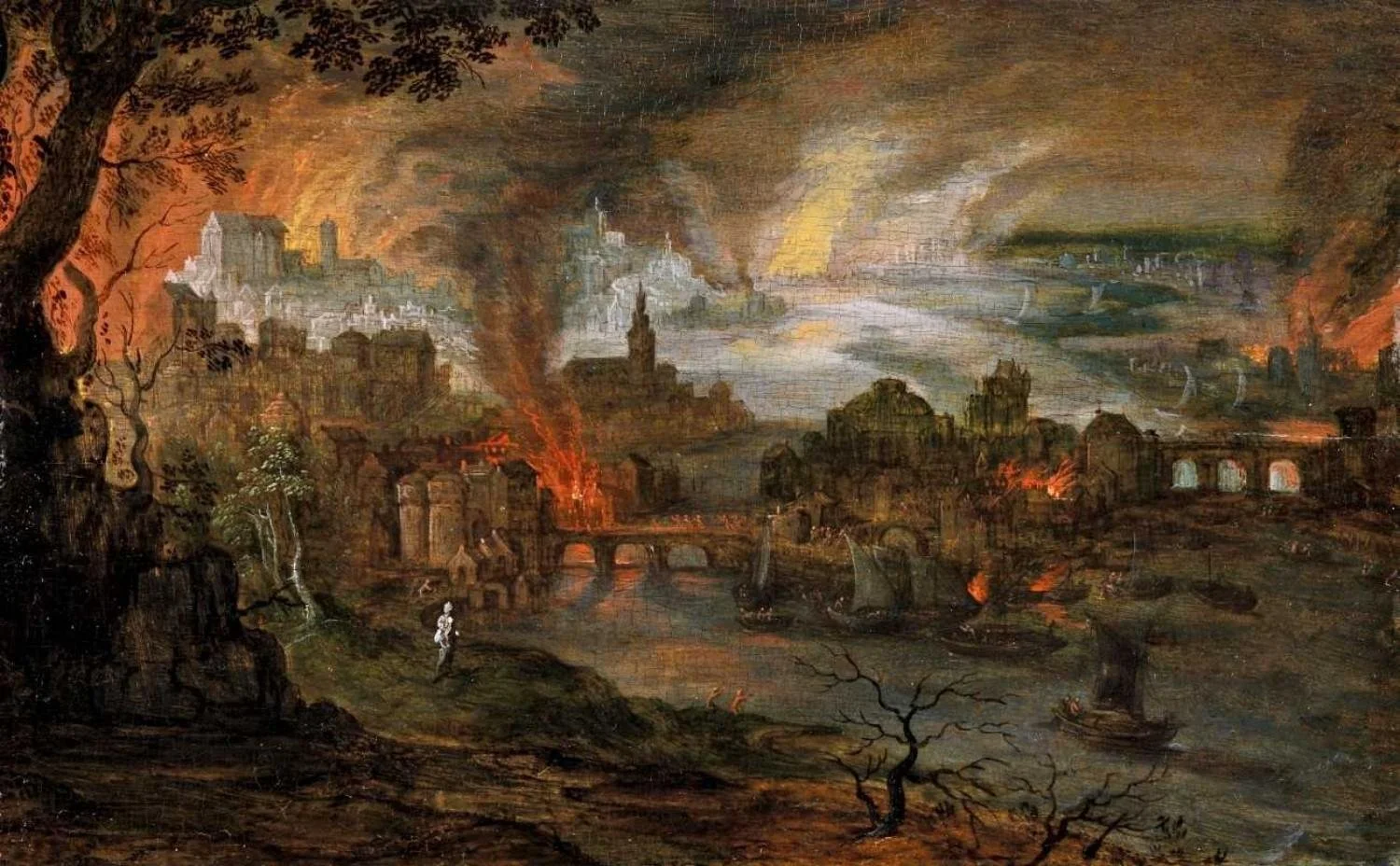
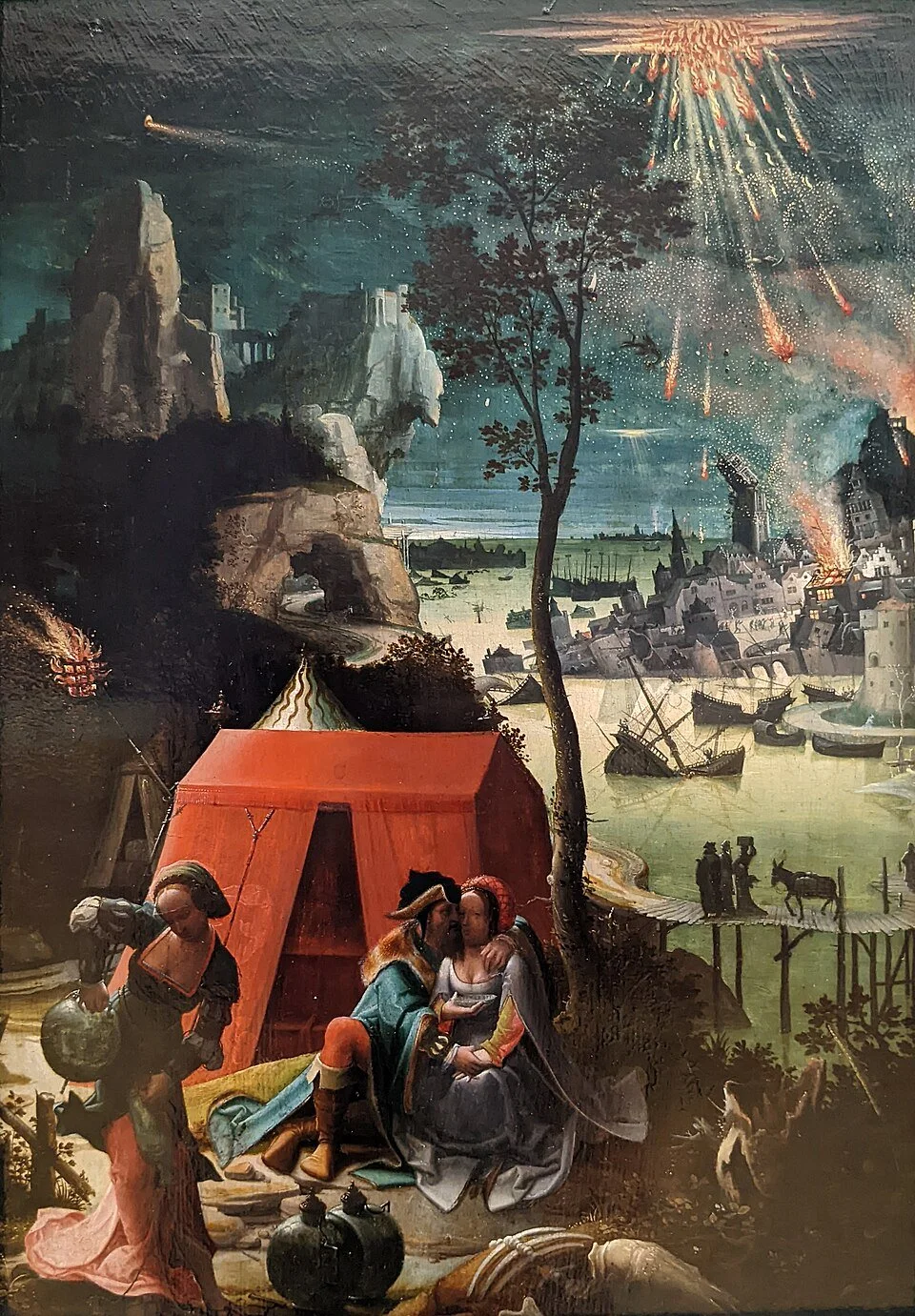
left: Sodom and Gomorrah by Pieter Schoubroeck Right: Lot and His Daughters is a c.1520 oil on panel painting
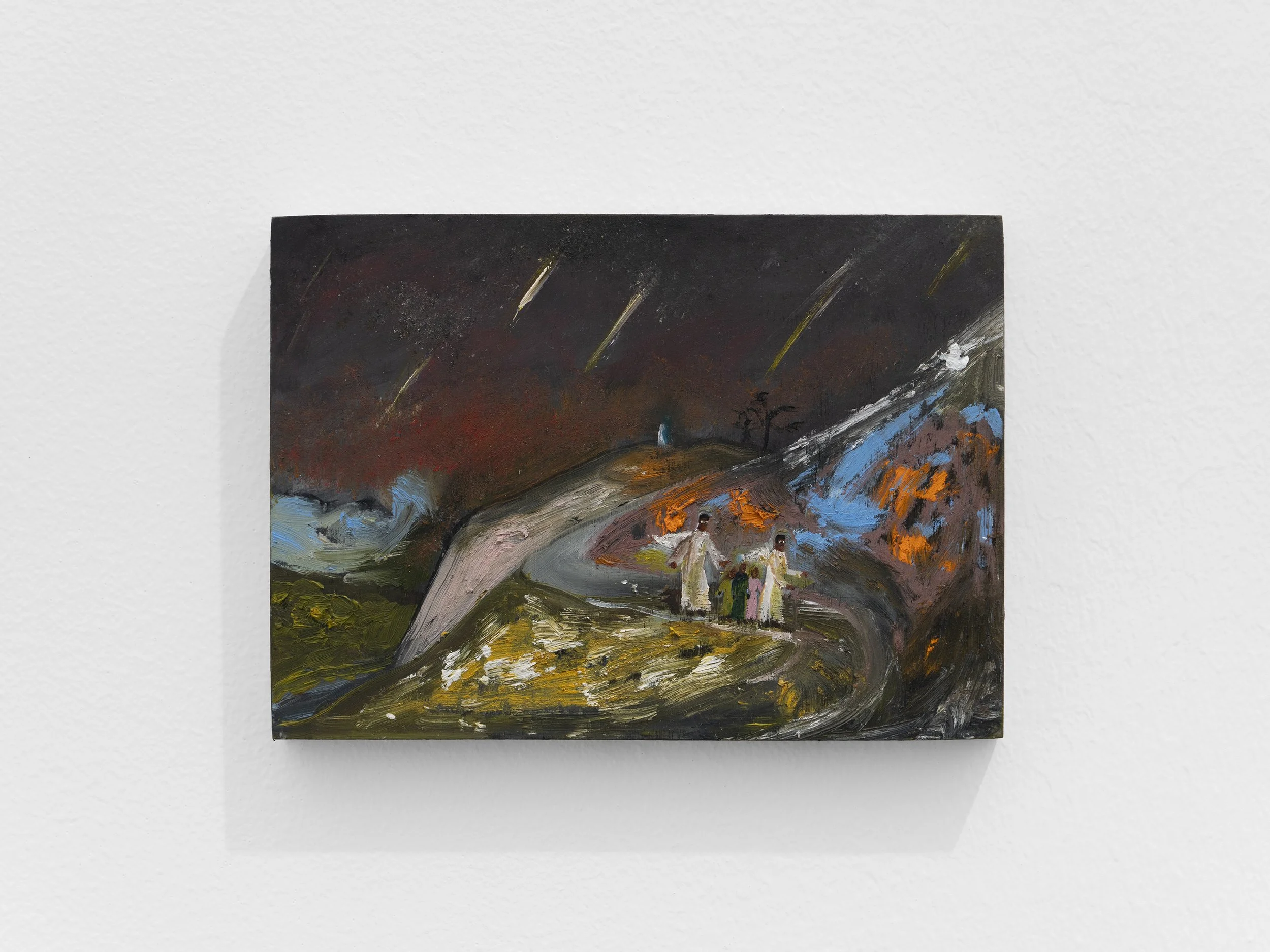
Left: Salt, 2026, oil on wood panel, 13 ×17.5cm Right: Lot’s Ladies, 2026, oil on wood panel, 13 ×17.5cm