A Vision Of The Sublime
I recently celebrated my birthday and, as often happens with the passing of another year, I found myself reflecting on a number of things, most notably my artistic practice. What message do I want my work to convey? Why do I make the work that I do?
So much of my practice has centred around the Christian faith, and while I have thoroughly enjoyed examining my relationship with Christianity, as I enter another year of my life, I find myself becoming less interested in that which is immediately visible to the naked eye, or the surface aspects of religion and increasingly drawn to what lies beyond the veil.
This led me to revisit my own understanding of the sublime. Around three months ago, I experienced what I can only describe as a celestial insight, an encounter with something resembling a higher knowledge. These are the kinds of experiences I feel are best kept to oneself, for obvious reasons, so I won't go into detail about what I saw. Besides, I don't believe it was given to me to communicate through words, but rather through my artwork.
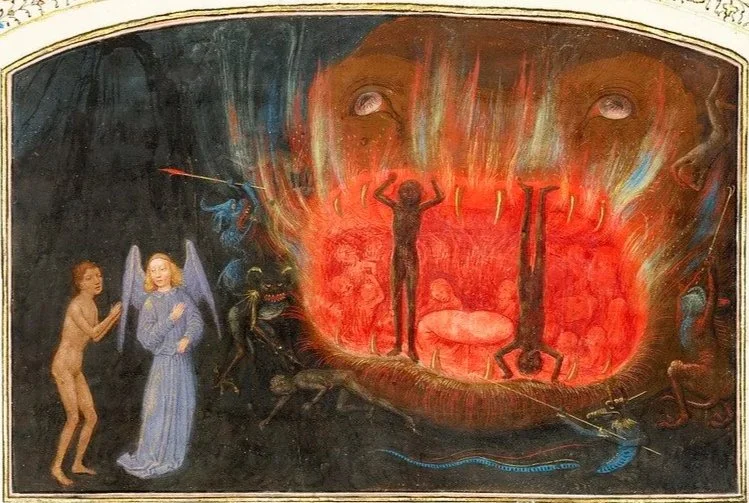
Shortly before this experience, I had discovered The Visions of the Knight Tondal (Visio Tnugdali), a twelfth-century medieval visionary text written around 1148–1149 by an Irish monk named Brother Marcus. The narrative follows a wealthy and arrogant Irish knight, Tondal (or Tnugdalus), whose soul leaves his body during a three-day trance. Accompanied by a guardian angel, he journeys through Hell, Purgatory and Heaven before returning to his body and embracing a life of piety.
Around the same time, I was also exploring the work of William Blake, specifically Jerusalem: The Emanation of the Giant Albion, which he worked on between 1804 and 1820. I particularly enjoyed watching this video, which examines the book in considerable detail: https://www.youtube.com/watch?v=EkBcFrygTKY
Both books employed art, painting, and text to convey their faith driven messages, and spiritual insights in away that is disarming and easy to digest, an approach that I hope to apply to my own work.
Interestingly, during my birthday week, the artist Georgia O'Keeffe seemed to be appearing everywhere on my social media feeds. She isn't an artist I've ever taken a particular interest in, but for whatever reason, I couldn't seem to escape her. I eventually decided to look up her birthday and was intrigued to discover that, like me, she was a Scorpio, with our birthdays falling just two days apart. Faith and serendipity at work again, perhaps?
One of several videos that appeared on my timeline during this time was titled Occult Art: Georgia O'Keeffe – Oppenheimer, Flowers & The Bomb. I found myself thoroughly absorbed by the ideas explored in relation to the occult and its relationship with art. Much of what was discussed resonated with my own understanding and experience of the sublime, and I could draw connections between the concepts presented and my own vision.
If I am to entertain the idea that artists and the work they create have a larger, perhaps even esoteric or cosmic, role to play, then I feel a responsibility to approach my practice with greater intention. Perhaps it is not simply a matter of making work about spirituality, faith or the unseen, but of allowing those things to inform the very process of making. If there is something beyond what we can readily comprehend, something that can only be approached through intuition, symbolism and the language of art, then I want to remain open to it. I want the work I create to be intentional, spiritually guided and, above all, true to whatever it is I feel compelled to communicate.
Sisters Of Sorrow: A House Of Incest.
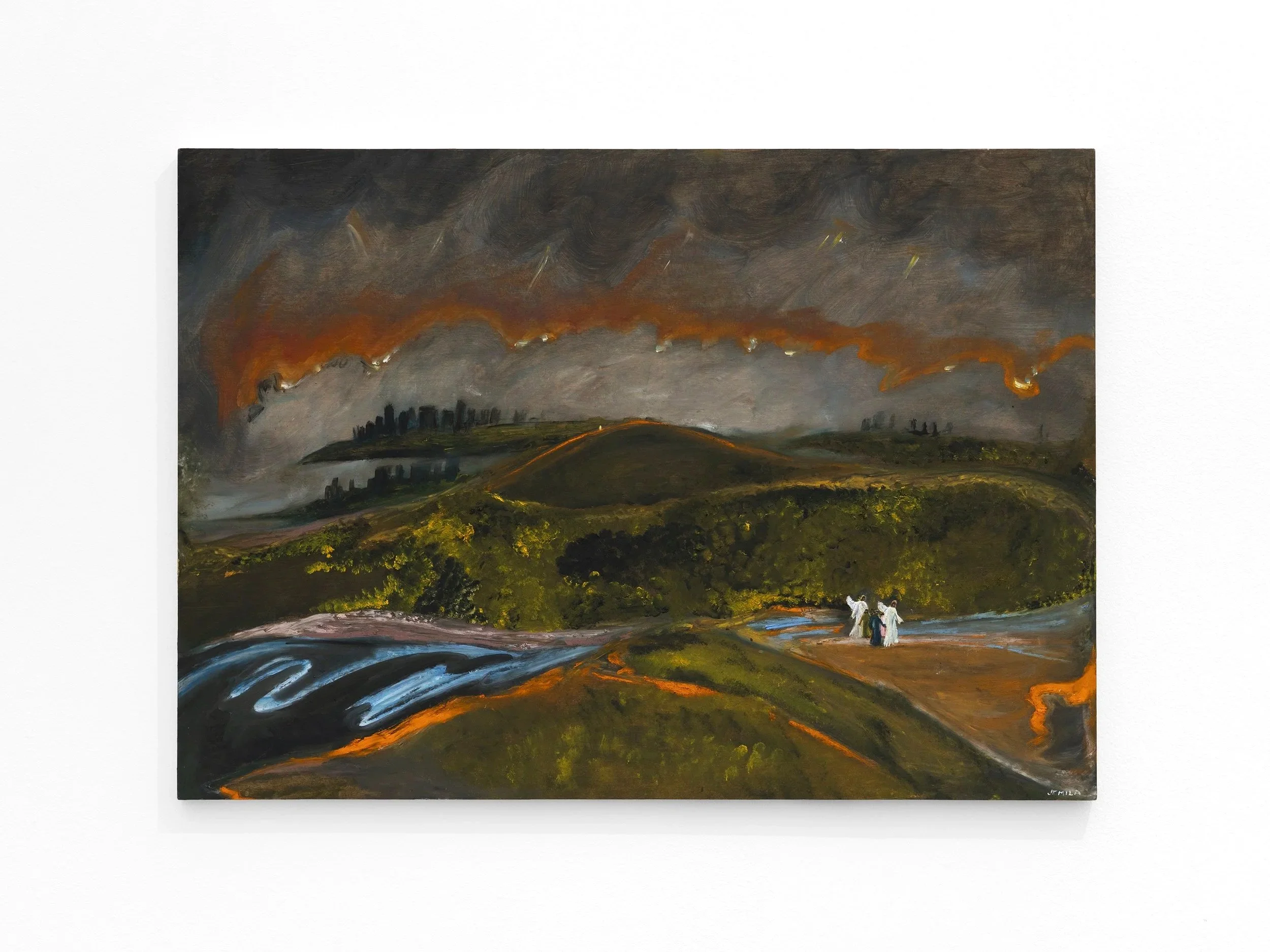
House Of Incest, 2026, oil on wood panel, 59.4 × 84.1 cm
I recently painted a series of works that were presented at Frieze London this past October. The paintings offer a kind of visual retelling of the biblical story of Sodom and Gomorrah, with particular attention to the roles of Lot, his wife and his daughters.
I have been interested in, and somewhat disturbed by, this story ever since I first encountered it as a child. The idea of a woman turning into a pillar of salt was instantly intriguing to me. With my childhood understanding of the world, it didn't seem entirely outside the realm of possibility. It felt completely plausible that disobeying a commandment from God could result in such an extraordinary punishment. Fear and control were, at least within my household, some of the central pillars upon which faith was built.
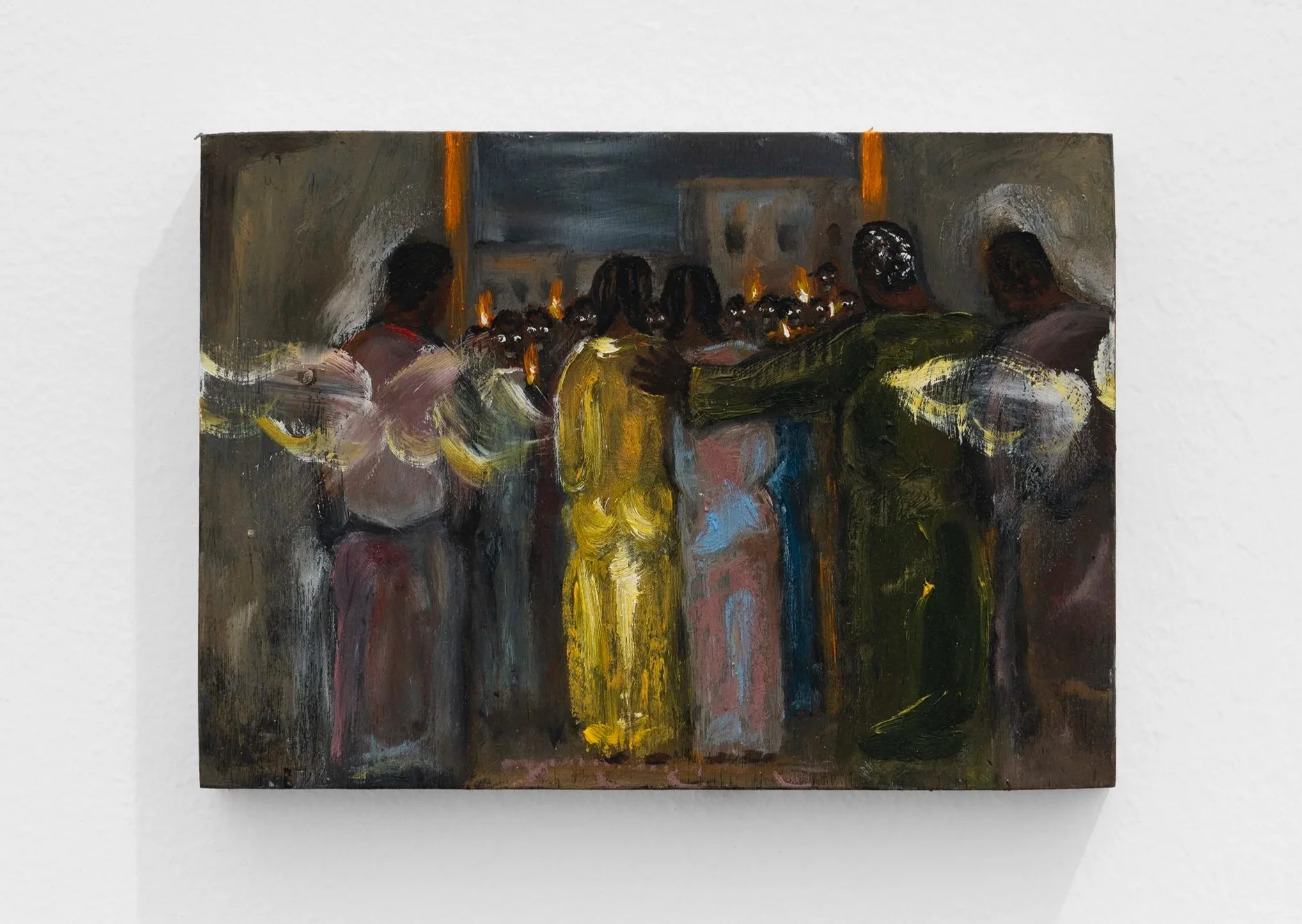
Lambs to Wolves, 2026, oil on wood panel, 13 ×17.5cm
It wasn't until I was older that I began to look more closely at the other, arguably more disturbing, aspects of the story. Lot offering his daughters to an angry mob in exchange for leaving the visiting angels alone, and his daughters later allegedly getting him drunk in order to seduce him and become pregnant by him. If we are to accept these accounts as true and examine them through a contemporary understanding of familial dynamics and patriarchy, it is not difficult to question the narrative we have been given. I find myself wondering whether it was, in fact, Lot who intoxicated his daughters and coerced or forced them into sexual acts for his own gratification.
There are many biblical narratives that seem to position women who exercise any degree of autonomy as destructive or dangerous figures. From Eve, whose actions are presented as the catalyst for humanity's downfall, to Lot's wife and daughters, women are repeatedly cast as the source of temptation, disobedience and destruction. Their stories are often told through a lens that leaves little room for their own agency, interior lives or perspectives.
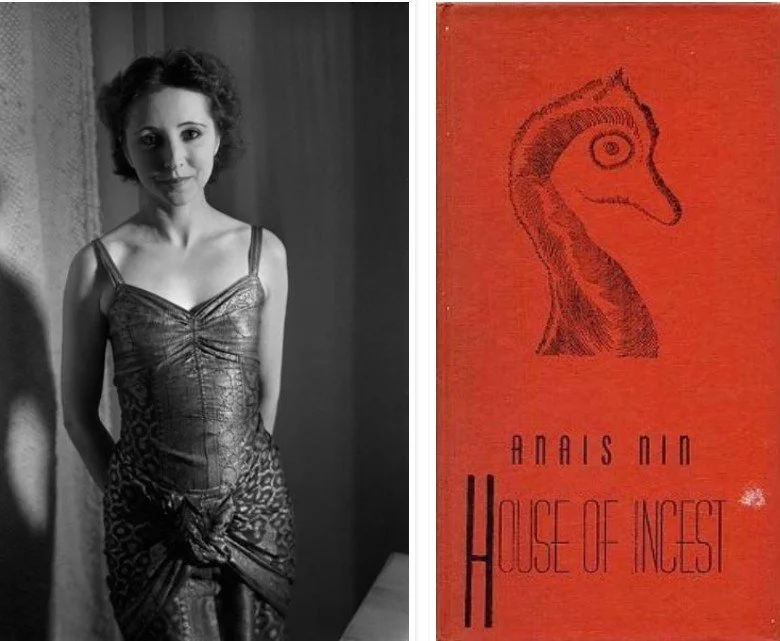
Anais Nin, House Of Incest, 1936
While making these paintings, I was reading The Passion According to G.H. by Clarice Lispector and House of Incest by Anaïs Nin, the latter of which I also used as the title for one of the works. We know remarkably little about Lot's wife from the biblical account, but I found myself imagining a woman who might share something with the protagonists of both books: women who have abandoned conventional ideas of sanity, morality and order in favour of following themselves into the deepest and darkest corners of their own psyches. Women who are at once consumed by their inner worlds, yet remain entangled in vanity, desire and the impulses of the flesh.
In many ways, I am interested in imagining these female characters beyond the brief, cautionary role assigned to them in their biblical stories. Rather than seeing them simply as a woman who disobeyed God and were punished for it, I want to consider who they might have been outside of that moment, what their inner worlds might have looked like, and whether the ‘destructive’ roles that allegedly played are accurate, or a false retelling of a story intended to once again place blame on a woman, in order to protect the legacy of a man.
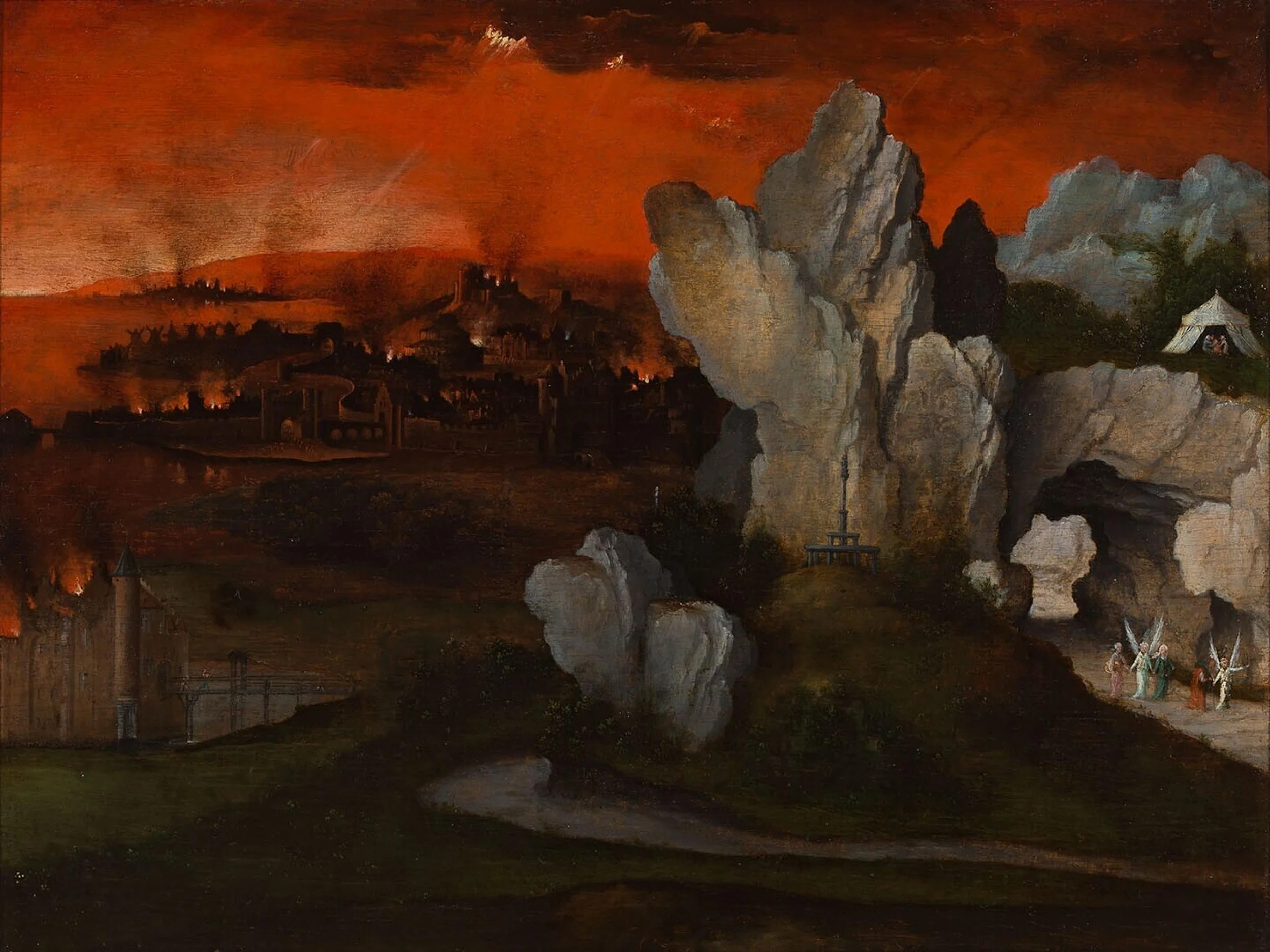
While developing these paintings, I spent a lot of time looking at historical depictions of biblical scenes relating to Sodom and Gomorrah. One painting in particular stood out to me: Landscape before the Destruction of Sodom and Gomorrah by Joachim Patinir. I was especially drawn to the large white structures on the right-hand side of the composition. I assume they are rock formations, although they could just as easily be thick plumes of smoke. I found this ambiguity particularly compelling; the uncertainty of what I was looking at only made the forms more intriguing to me.
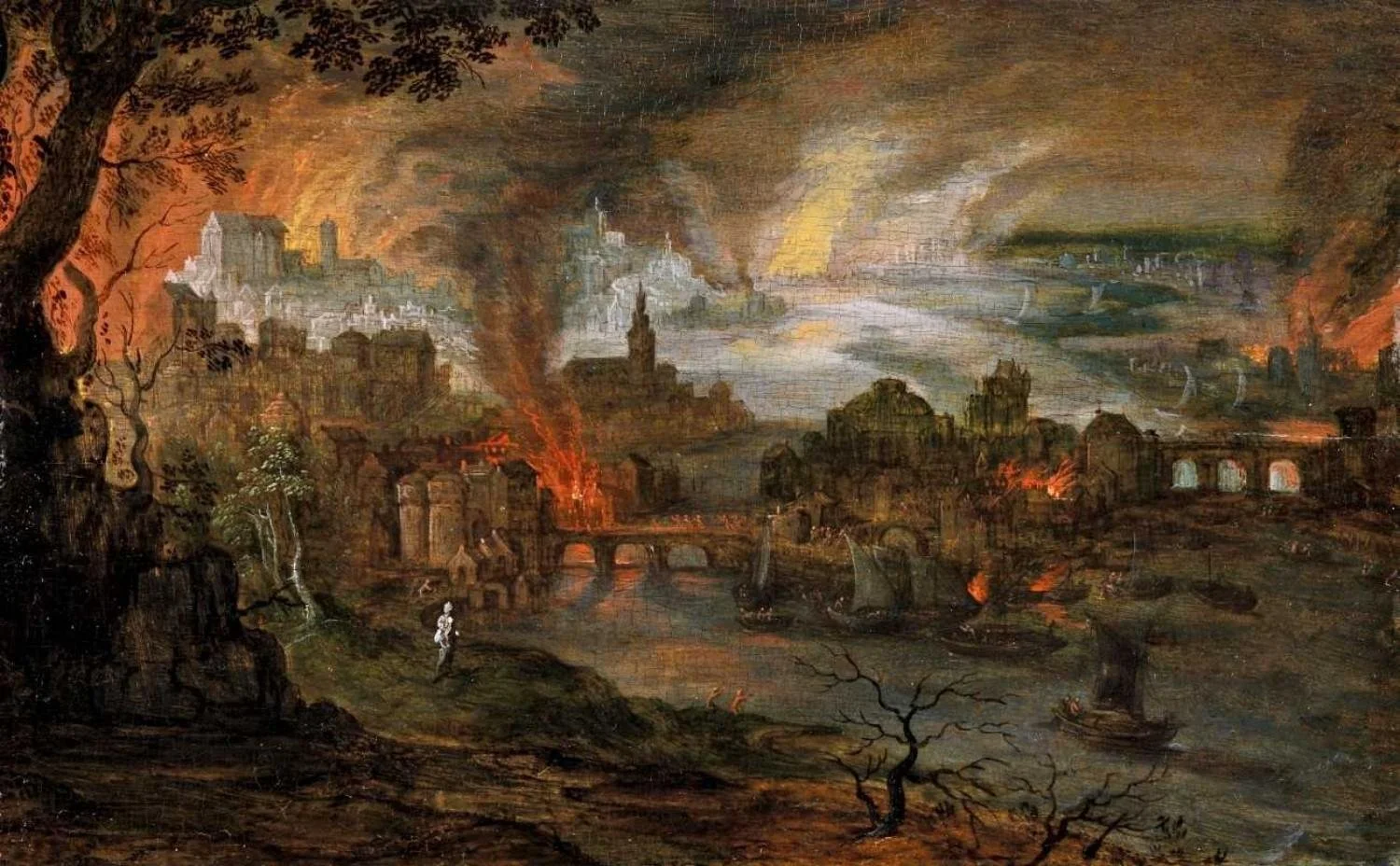
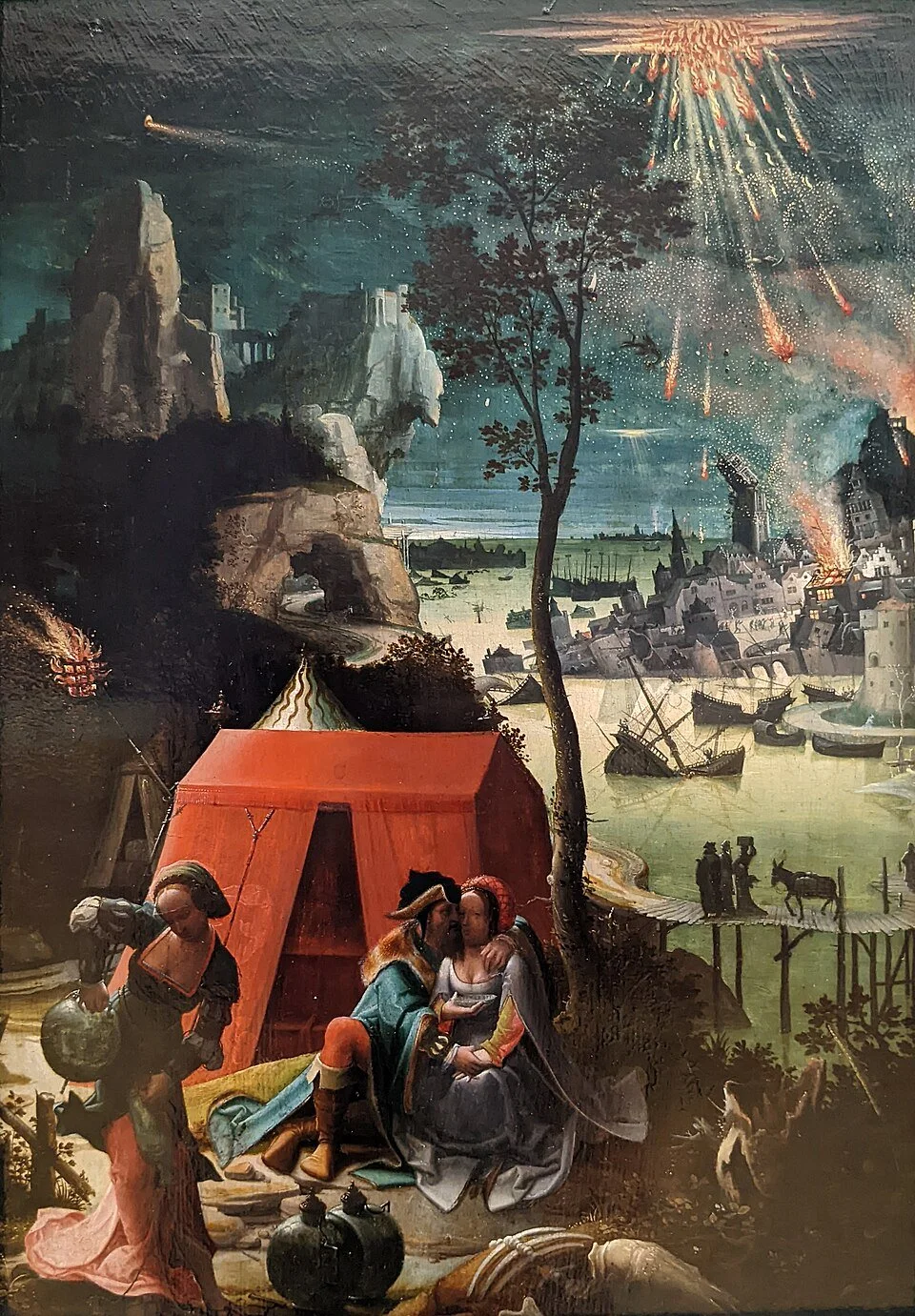
left: Sodom and Gomorrah by Pieter Schoubroeck Right: Lot and His Daughters is a c.1520 oil on panel painting
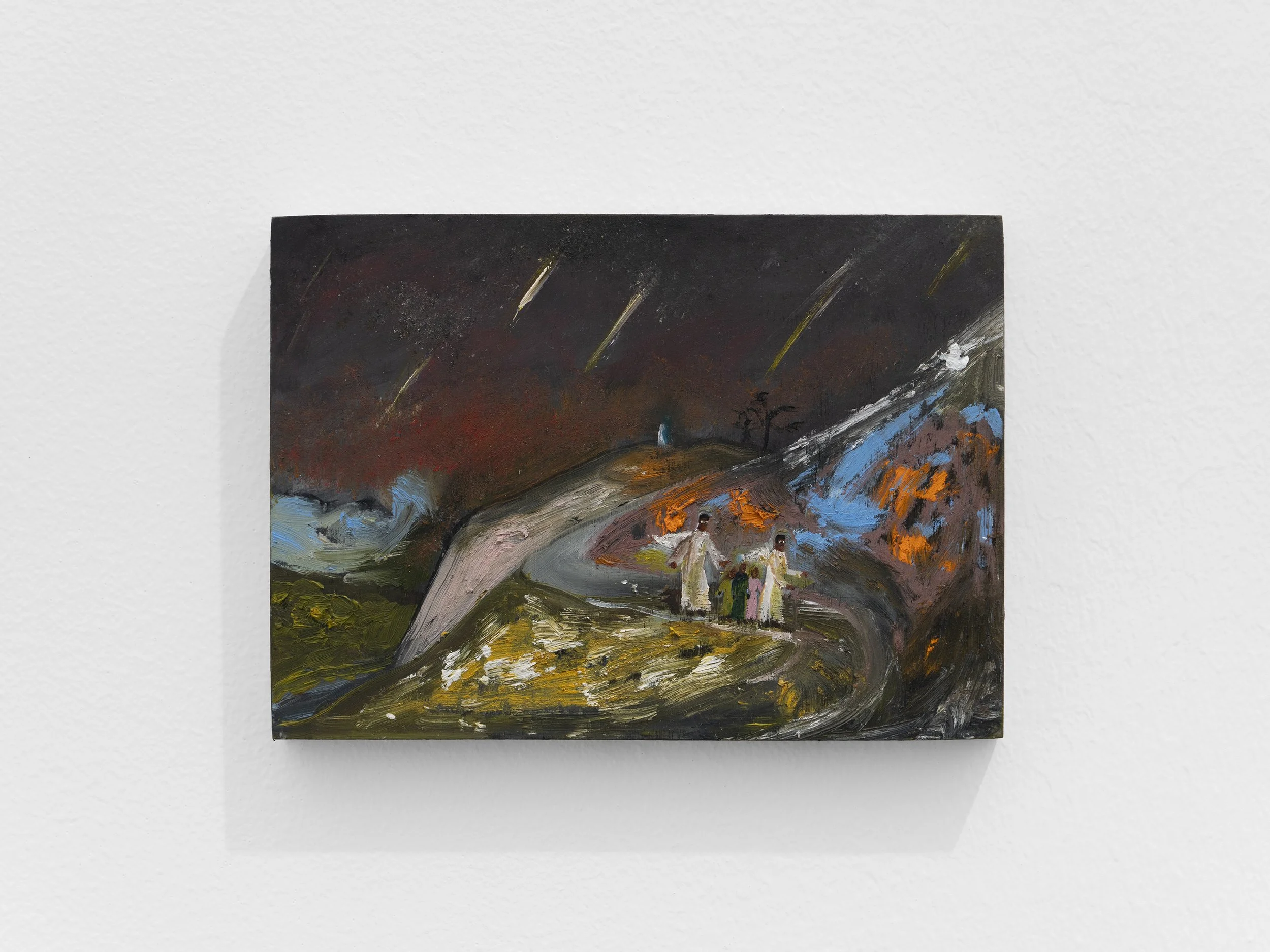
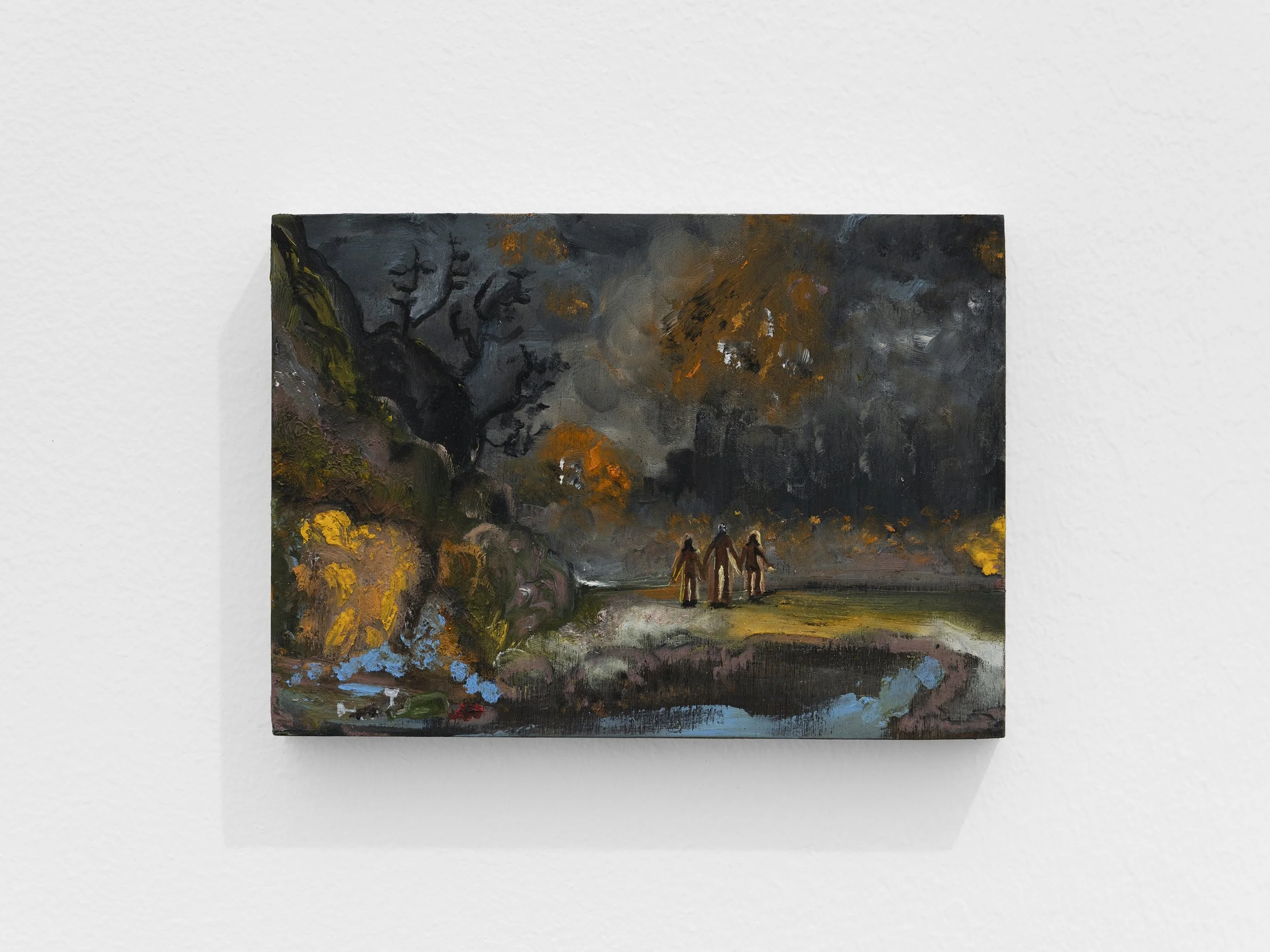
Left: Salt, 2026, oil on wood panel, 13 ×17.5cm Right: Lot’s Ladies, 2026, oil on wood panel, 13 ×17.5cm
Dreams Lost Upon Waking.
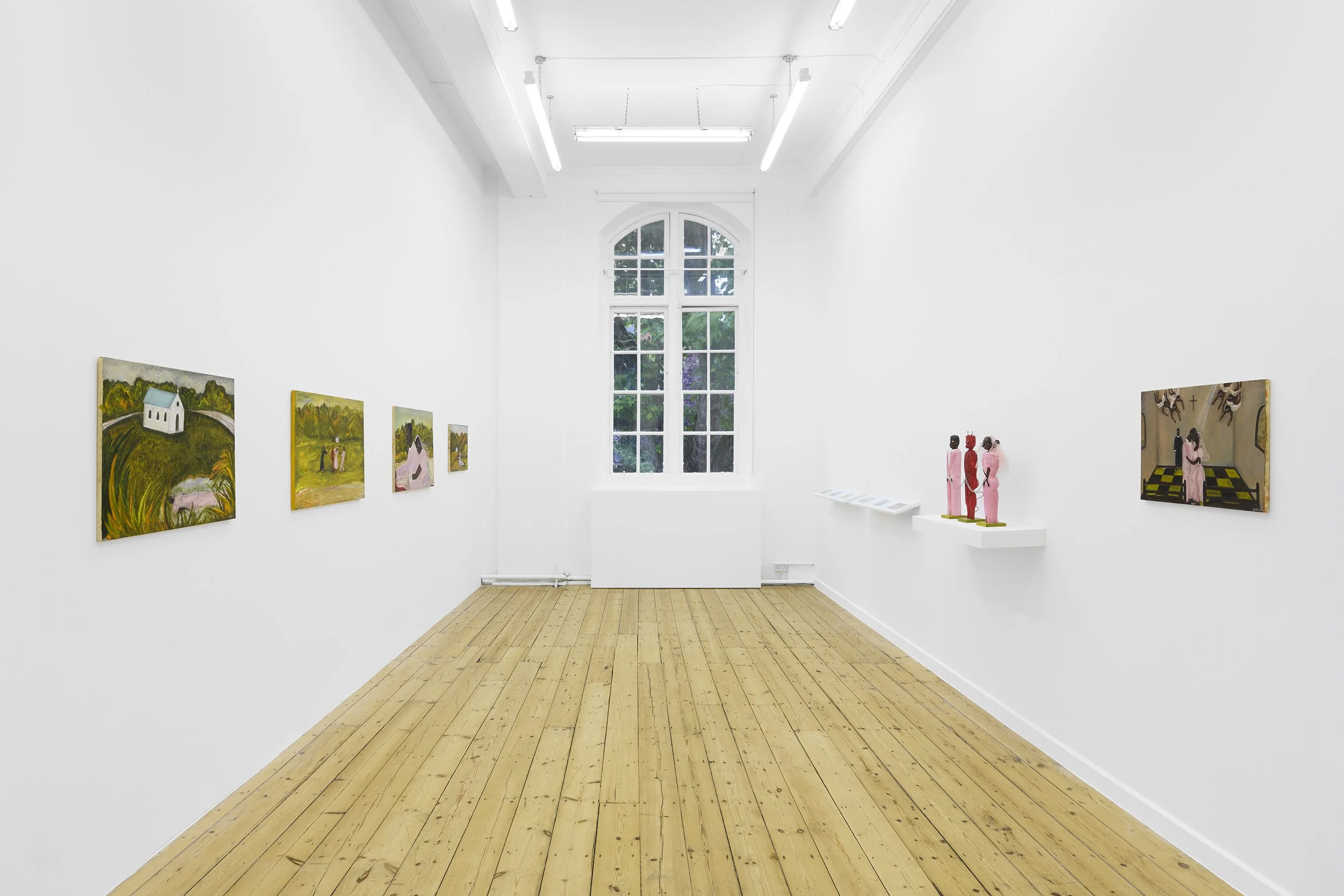
This summer I had a solo show at Maureen Paley (Studio M) gallery in London, the work that I created for the exhibition was inspired by a dream that I had in 2015. The dream was so vivid and visually opulent that I woke up after having had it and immediately made a note of the dream in my phone’s notepad. I intuitively knew that it would eventually be of some significance to me.
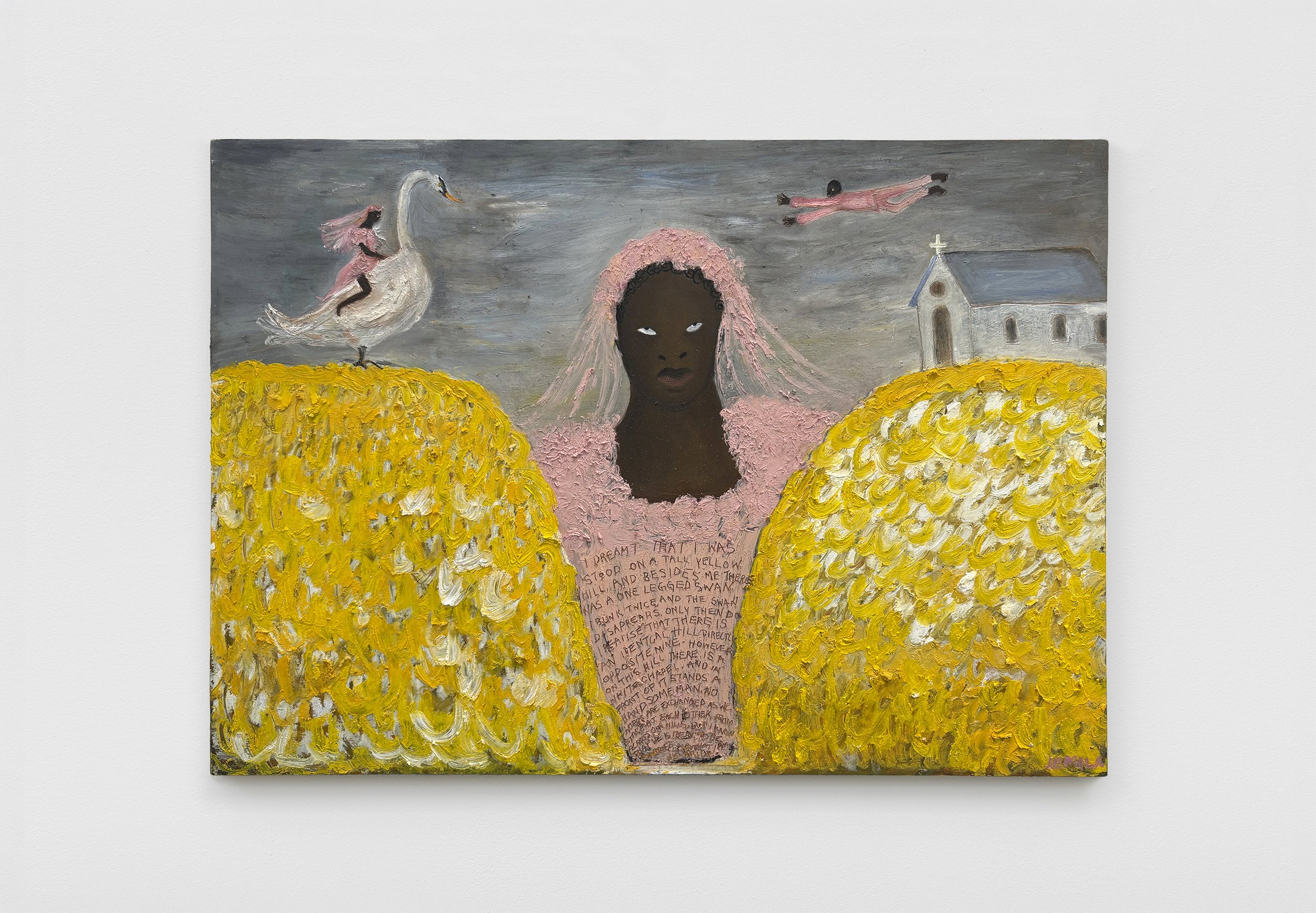
The exact text that I wrote over a decade ago is also written on one of the works in the show titled The Dream, 2026, oil on wood panel, 42 x 59.4 cm
Shortly after I had the dream, I watched the 1959 film Black Orpheus and was struck by how visually similar it was to the dream that I had. The vivid colours, the yellow sand, pinks textiles, tropical palm tree covered landscapes, and the various hues of brown skin.
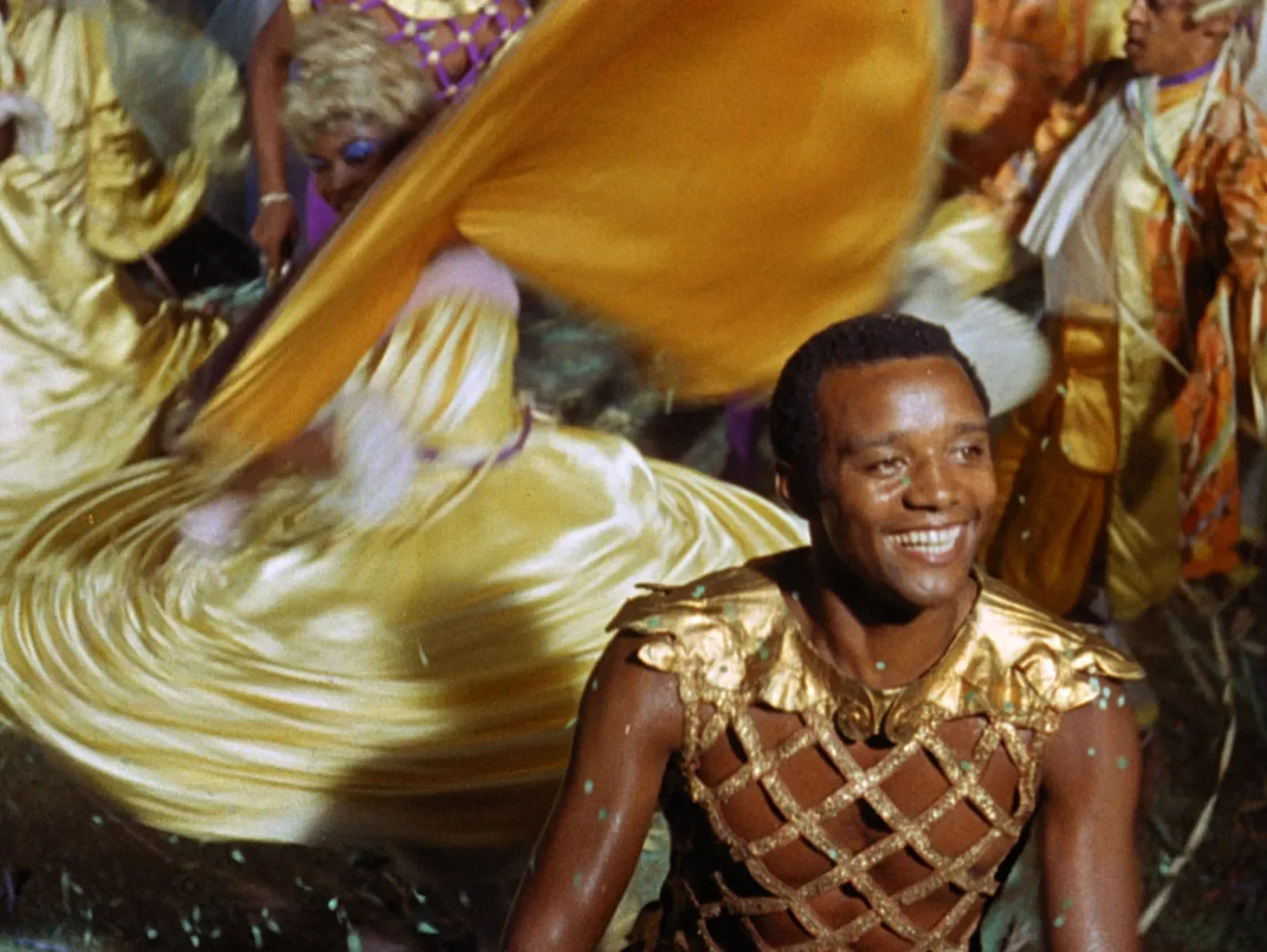
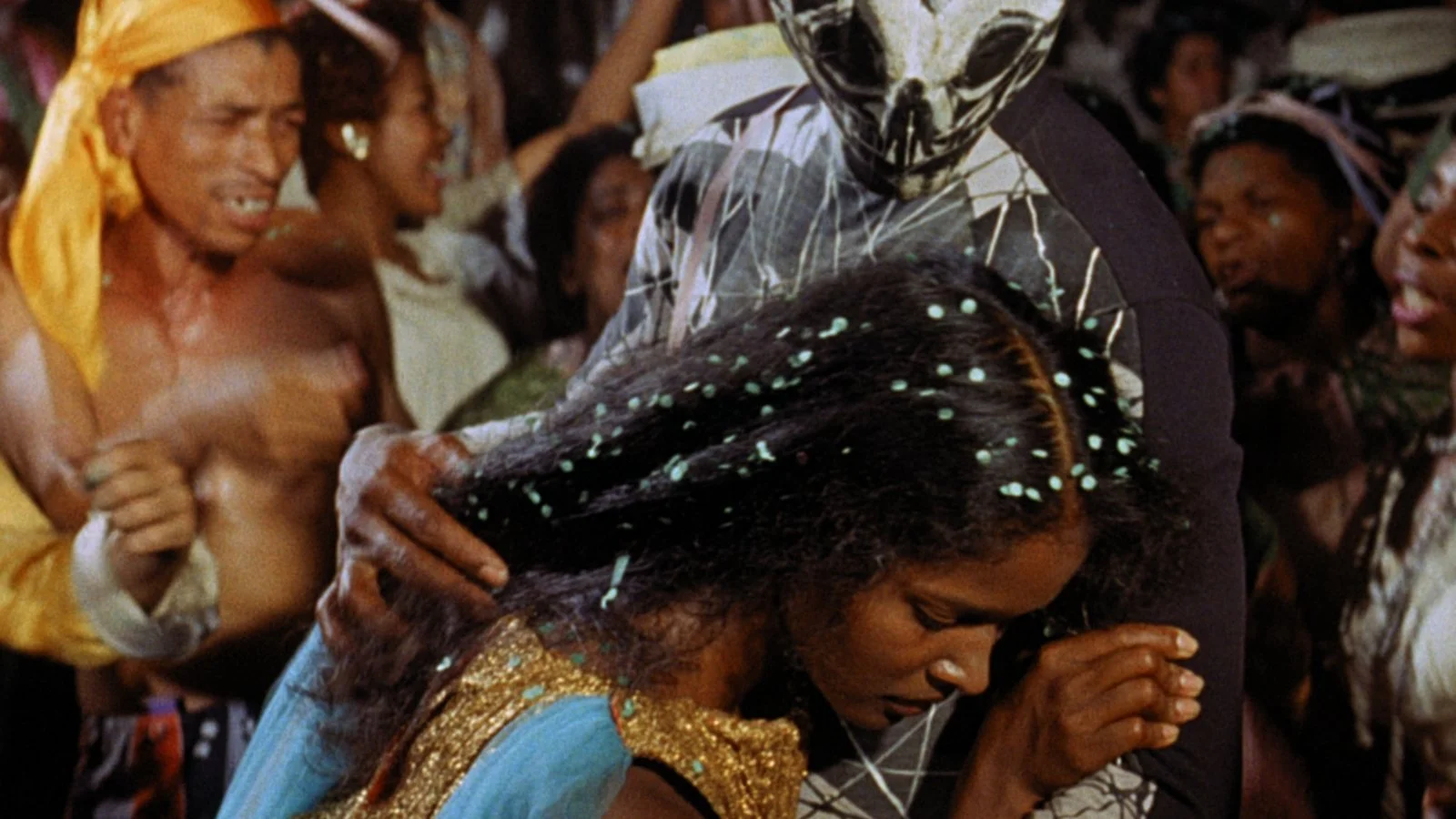
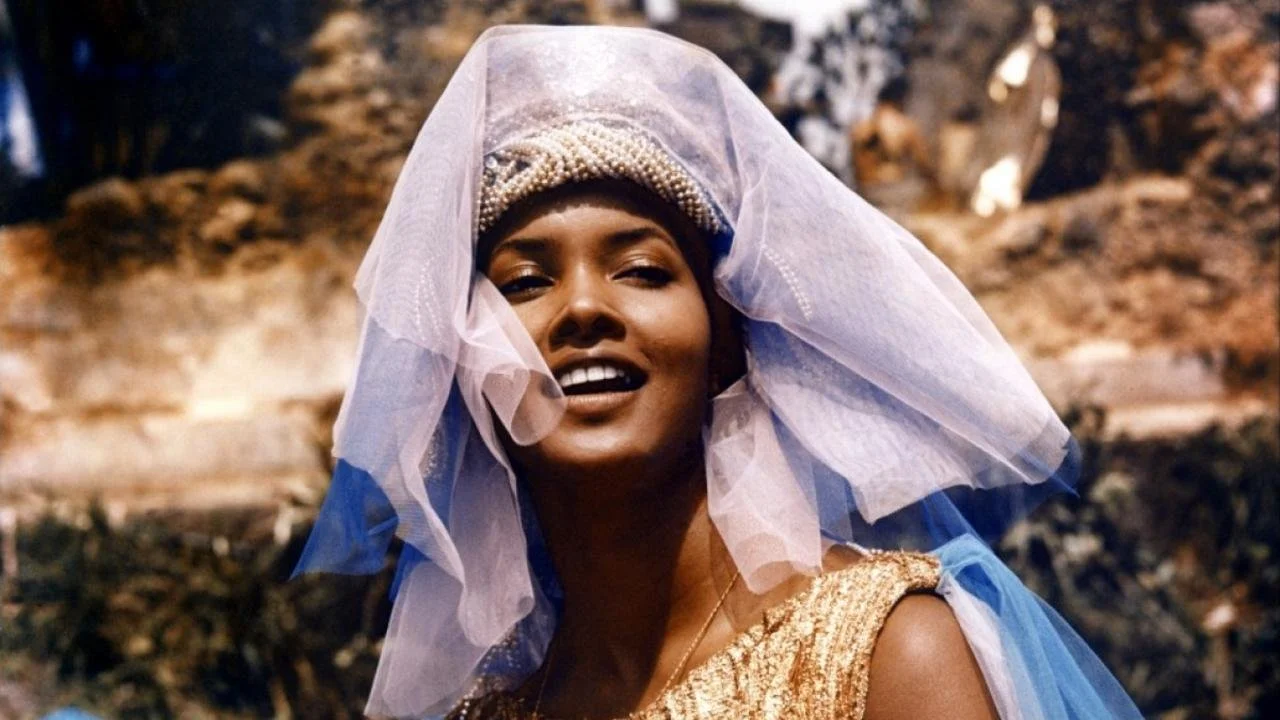
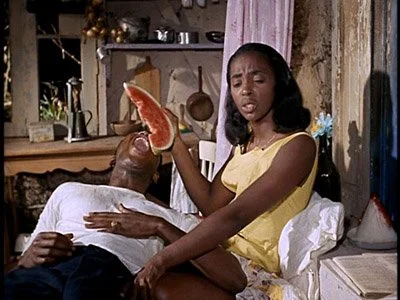
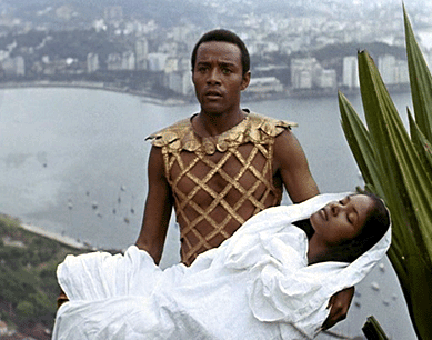
This discovery then led me down the path of researching more Afro-Latin art from genres spanning music, film, sculpture, and painting, from there I discovered Haitian artists such as Ernst Prophete, PhilomÉ Obin, and Edger Jean- Baptiste amongst many more. All these artists shared a common theme of spirituality, religion, and the occult running through their work, which is fitting to me as my own work also engages with these themes.
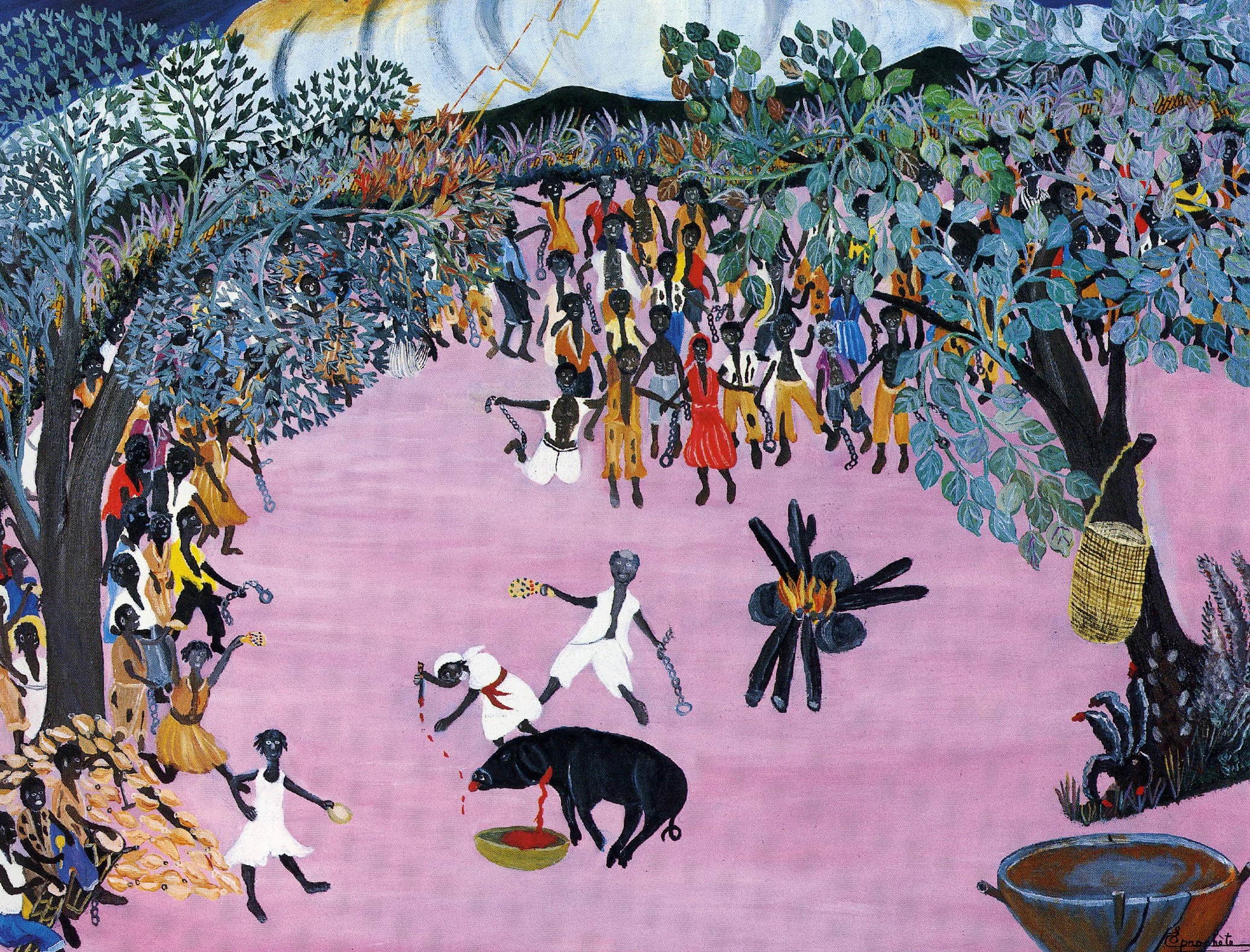
Prophete, Ernst (Haitian, b. 1950), Ceremonie du Bois Caiman, 1996, oil on canvas, 23 3/4 x 29 3/4 in
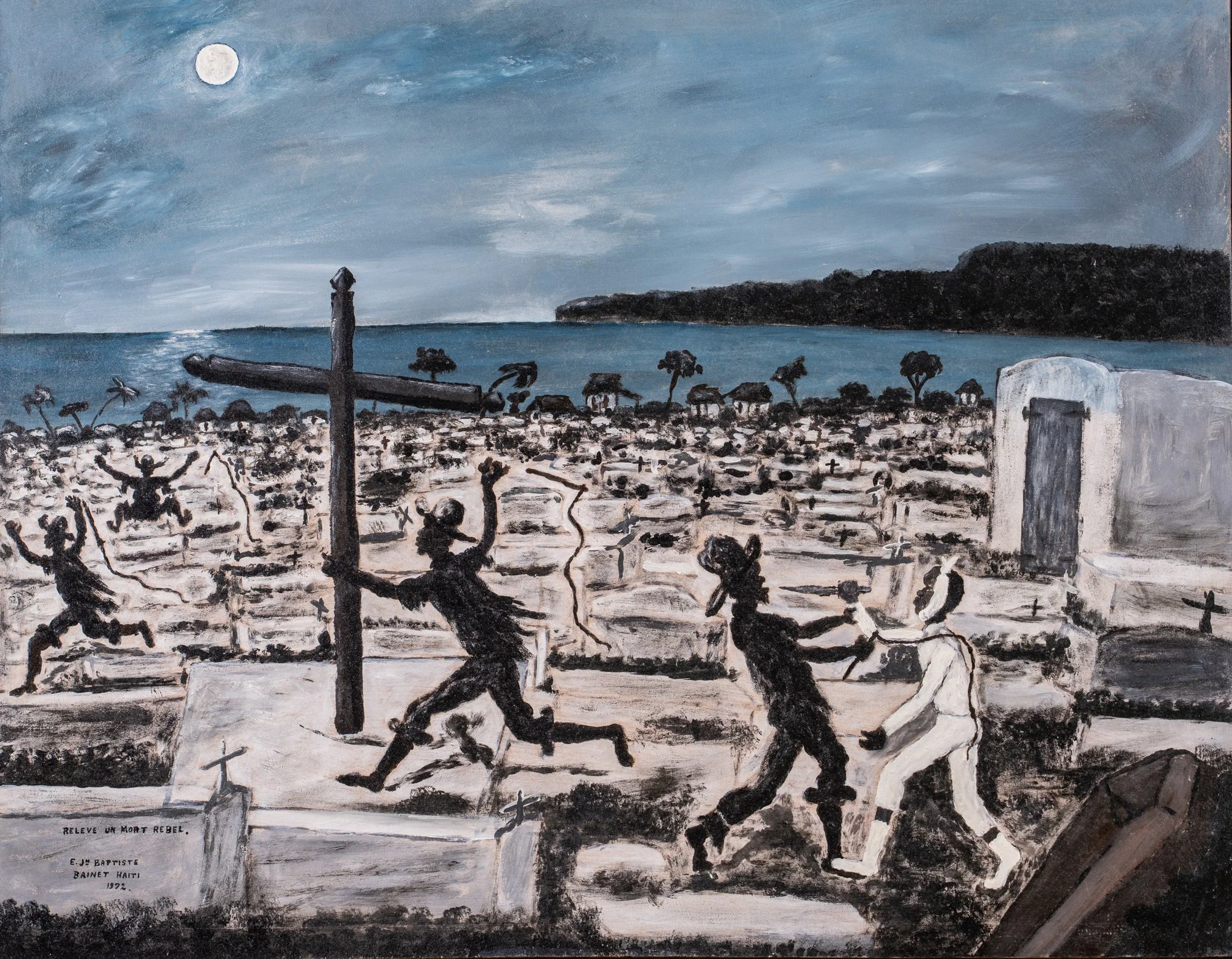
Jean-Baptiste, Edger (Haitian, 1917 - 1992), Releve Un Mort Rebelle, 1972, oil on board,17.75 x 22.75 in
For the exhibition I really leaned into this very gimmicky depiction of a devil and found myself also looking at a lot of images of Woodcuts from 18th-Century Chapbooks where the devil was often depicted in this very cartoonish style.
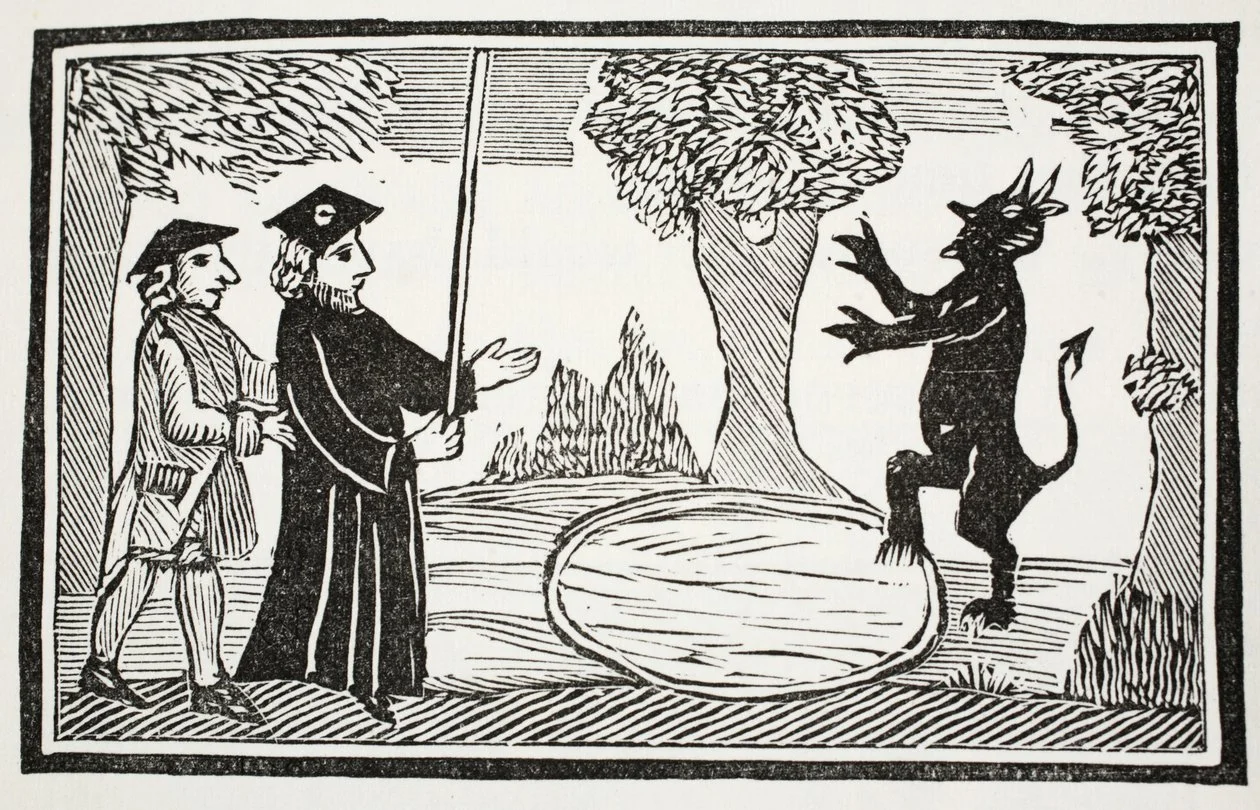
(Dr. Fautus raises the Devil, illustration from Chap-books of the Eighteenth Century by John Ashton, pub. 1882 )
Just a little over a year after I initially had my dream, I was married, and three years after that I was divorced, coming out of that marriage I found myself re-examining my thoughts around marriage, who is it really for, who does it serve, is the monotony of marriage truly aspirational? Does the red devil that murders a young brides groom on her wedding night seek to cause pain, or to emancipate the young bride from a life that would more than likely eventually ask her to minimise herself?
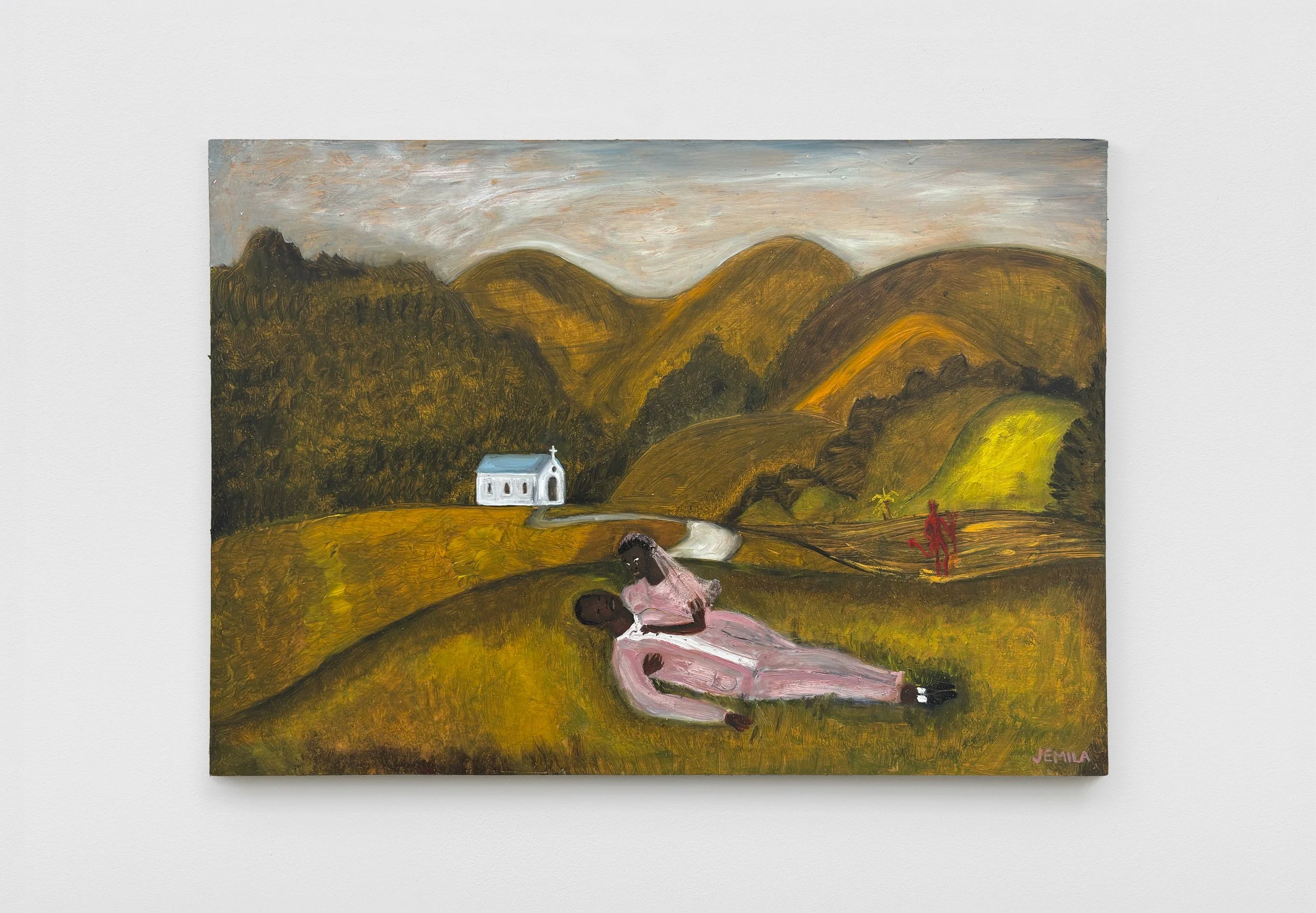
Emancipation, 2026, oil on wood panel, 42 × 59.4 cm
The exhibit closed a few weeks ago, but I have since found myself reflecting on the dream, and some of the other underlining themes of the show, which have ironically become relevant to my life again.
Thoughts of domesticity, and all that it demands of us, are all, once again at the forefront of my mind. And I find myself asking, what ultimately matters to me most, not only today, but forever more. At the very end of my life, just before I take my final breath, which sacrifice will I say was worth it? A complete mastery of self, total autonomy without compromise, or succumbing to the force of nature that we call romantic love, and perhaps most significantly- is sacrifice and compromise an inevitable requirement to truly know love?
It is simultaneously my greatest fear and most profound delight to know that this is one of the questions that we often don’t get to know the answer to until it’s already too late.